

By Connor Jorgensen, Director of Business Development, TUSK Practice Sales
Picture the day you hand over the keys to your dental practice in St. Louis, Missouri. The day you walk out of your operatory for the last time as the owner. Now count backward. If that day is five years away, the decisions that shape your exit are the ones you are making right now.
St. Louis dental practice exit planning starts well before a listing goes live. If you are thinking, “I want to sell my dental practice in St. Louis in five years,” waiting four years to begin preparing can limit your options. By the time you go to market, the financial results from the preceding two or three years are already helping buyers form their offers.
Whether you are considering a private doctor-to-doctor sale or a dental support organization (DSO), early preparation gives you time to align practice performance, buyer expectations and your retirement goals.
Your Retirement Timeline and Your Sale Timeline Are Different
When do you actually want to step back from the chair? That question matters as much as when you want to transfer ownership.
If your plan is to reduce your production and improve your work-life balance, coordinate those changes with your transition strategy. Buyers may review updated financial and production reports throughout due diligence, including after you sign a letter of intent (LOI). A decline in performance can prompt questions about the practice’s outlook and affect the proposed terms.
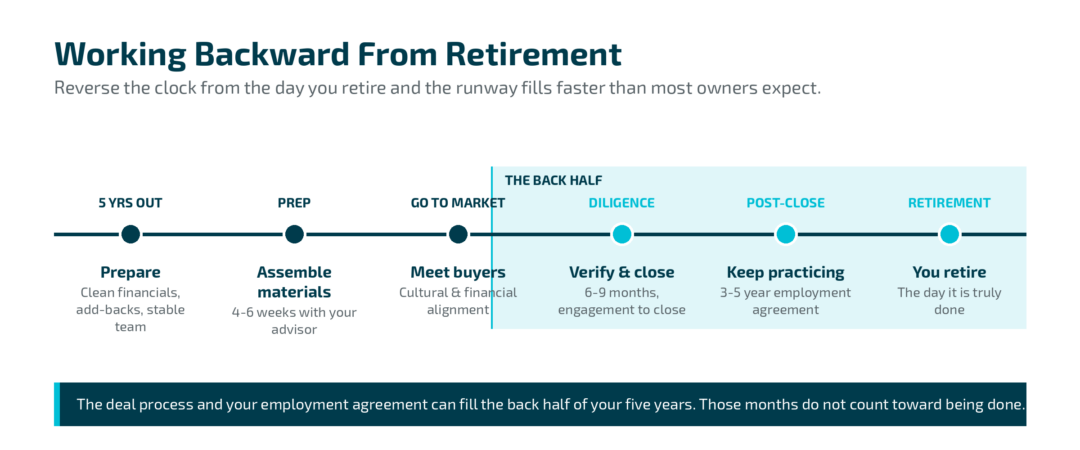
DSO transactions often involve a multiyear employment commitment after closing. Some arrangements require three to five years or longer, depending on the buyer, practice and negotiated agreement. Those years come after the sale process itself.
A traditional doctor-to-doctor transaction may allow a shorter handover, but that is not automatic. The buyer’s readiness, staffing, financing and patient transition needs all matter. These transactions also require meaningful due diligence, even when the practice is relatively small.
Before selling a dental practice in St. Louis, clarify both your preferred ownership exit date and your final clinical work date.
What St. Louis Dental Practice Exit Planning Involves
A well-prepared sale takes time. Buyers need a clear picture of how the practice operates, how it earns revenue and what will support its performance after ownership changes.
For a DSO transaction, buyers commonly examine trailing twelve-month results and normalized earnings before interest, taxes, depreciation and amortization (EBITDA). They also review historical trends, provider production, service mix, payer mix, patient activity, location and team stability. An individual dentist and their lender may place particular emphasis on the cash flow available to support ownership and acquisition debt.
Before you sell a dental practice in St. Louis, organize the information that supports your practice’s story:
- Recent tax returns, profit-and-loss statements and current financial reports.
- Documented adjustments or add-backs that can be explained and supported.
- Production and collections reports by provider.
- Hygiene performance, patient activity and new-patient trends.
- Staffing information, provider schedules and relevant agreements.
- Office lease details, equipment information and real estate arrangements.
An advisor can use this information to prepare marketing materials and identify issues that may draw scrutiny during diligence. Preparation may take several weeks, with additional time needed if records are incomplete or inconsistencies require attention.
A DSO sale process may take six to nine months, although some transactions take longer. Buyer selection, financing, diligence and negotiations can change the timeline. Any post-closing employment commitment is additional.
What Buyers Look for in Dental Practices for Sale in St. Louis
Buyers comparing dental practices for sale in St. Louis need to understand how each opportunity fits their clinical interests, financial resources and preferred location. A dental practice for sale in St. Louis should be supported by accurate records and a credible plan for continuity after the seller steps back.
Location also shapes the conversation. A buyer interested in the city of St. Louis may have different preferences from one considering Chesterfield, Kirkwood, St. Charles or O’Fallon. Describe your actual location and patient base accurately so prospective buyers can assess the fit.
When evaluating dental offices for sale in St. Louis, buyers will also examine the premises. If you are preparing a dental office for sale in St. Louis, make sure you can explain whether the property is leased or owned and whether real estate is part of the proposed transaction.
The same preparation applies to dental clinics for sale in St. Louis. Regardless of whether a buyer searches for a practice, office or dental clinic for sale in St. Louis, clear information about the business and transition expectations helps move the conversation forward.
Work Backward From Your Desired Retirement Date
If you want to be fully retired in five years and are considering a DSO sale with a substantial employment commitment, now is the time to discuss your options. The transaction process and post-sale clinical obligations could consume most or all of that window.
If you want to retire in six or more years, use the time to understand your practice’s value, strengthen your team and address operational issues. If you prefer a private sale with a shorter clinical handover, discuss that goal early so your preparation reflects the type of buyer you want to attract.
Early planning can help you avoid making major decisions under pressure from burnout, health changes or declining performance. It does not guarantee a particular price or closing date, but it gives you more time to address problems and consider alternatives.
Choosing Support for St. Louis Dental Practice Sales
When comparing St. Louis dental practice brokers, ask how they would build a sale strategy around your retirement date, practice characteristics and preferred buyer type. A useful conversation should cover preparation, confidentiality, marketing, buyer evaluation and coordination with your other advisors.
If you are searching for the “best dental practice broker in St. Louis” or a “dental practice broker near me,” look beyond the search phrase. Ask about relevant transaction experience, communication, fees and whose interests the professional represents.
A St. Louis dental practice brokerage should help you understand how your goals relate to the available transition paths. DDSmatch St. Louis provides a local starting point for discussing practice sales and transition planning with Mike Rogers.
Questions to Ask Five Years Before You Sell
- When do I want to stop owning the practice, and when do I want to stop practicing dentistry?
- What do I need from a sale financially and operationally?
- How long am I willing to work after closing?
- Would a private buyer, partnership or DSO arrangement best fit my goals?
- Can I maintain practice performance while preparing for a transition?
- What staffing, financial or lease issues should I address now?
You do not have to be ready to sell to start getting ready. A dental practice valuation and a candid discussion about your timeline can establish a starting point. A valuation is an estimate, and the eventual outcome depends on buyer interest, diligence and negotiated terms.
Start Planning Your St. Louis Dental Practice Exit
Successful St. Louis dental transitions begin with a clear understanding of the owner’s goals. Whether you expect to sell soon or are several years from retirement, use this time to prepare your practice and explore your options.